
The Love Language of Elder Caregiving
Aging rarely announces itself all at once. More often, it arrives quietly through subtle changes families explain away out of love, hope, denial, exhaustion, or simply not knowing what to do with what they’re seeing. In this deeply reflective piece, we explore the quiet transition from daughters to caregivers, the invisible labor of family caregiving, the importance of preparation before crisis, and the emotional, operational, financial, and advocacy realities families are rarely taught to navigate. The Love Language of Elder Caregiving is an honest conversation about aging, family responsibility, and the many ways love quietly shows up during life’s hardest seasons.
MENTAL HEALTHRELATIONSHIPSELDER CARE
Renetta Smith, Founder and CEO
5/23/20269 min read

Original content created by no more hiding™ © 2026 All rights reserved.
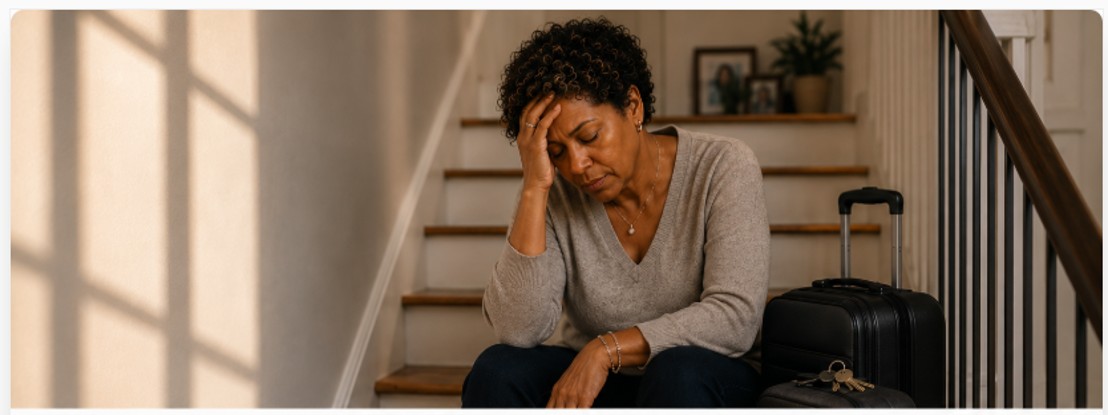
When I finally walked into the house, I dropped my suitcase and my house keys, sat on the stairs, and cried.
Not delicate Hallmark movie tears.
But one of those loud, ugly cries that echoed through the empty house — the kind that comes when your mind and body finally feel safe enough to release six weeks of adrenaline, responsibility, sadness, confusion, and fear.
Aging rarely announces itself all at once. More often, it arrives quietly through subtle changes families explain away out of love, hope, denial, procrastination, or emotional exhaustion. In this deeply reflective piece, we explore the quiet normalization of warning signs, the emotional transition from daughters to caregivers, and the difficult realities families are often unprepared to face while caring for an aging parent.
One moment you’re living your normal life, updating your grocery list, returning calls to your high school classmates, scheduling tee times, and responding to silly text messages from your sister… and the next, you find yourself standing in a hospital emergency room hallway trying to make urgent decisions that are in the best interest of your aging loved one while hoping you’re doing what they’d want.
What I Know For Certain
Benjamin Franklin once wrote: “Nothing is certain except death and taxes.”
I think we should add one more:
aging.
If we’re fortunate, we pray to live long enough to grow old. We celebrate long life. We honor longevity. We call it a blessing to reach ninety years old. But very few families talk honestly about what aging can actually require — emotionally, physically, financially, and operationally.
What does it truly mean to care for someone who once cared for you? What happens when the person who raised the family slowly becomes the person the family must now protect? What happens when independence begins quietly slipping away one subtle change at a time?
Many of us are completely unprepared for the emotional role reversal that accompanies aging parents. Not because we don’t love them, and not because we don’t want to help. But because somewhere deep inside, many of us still see our parents as permanent fixtures in our lives — strong, capable, wise, and somehow immune to fragility.
Until one day they aren’t.
And even then, families often normalize the warning signs because the alternative feels too painful to confront.
We explain things away.
“She’s just slowing down a little.” “Don't be so hard on him, he's always been forgetful.” "It's been a long day. She’s just tired.” “Don't overreact! He’s just getting older.”
And sometimes those things are true.
But sometimes they are the early breadcrumbs leading families toward caregiving, difficult decisions, grief, burnout, and life transitions they never imagined having to navigate.
See Something, For God’s Sake SAY Something!
We saw things we probably shouldn't have shrugged off.
The occasional stumble. The slower walk. The increasing fatigue. The frequent bathroom breaks. The unexplained dents in the car bumper and garage door. The near falls that somehow became normal age-related stuff. The repeated “I’m fine.” or my personal favorite:
“Baby, you keep on goin’ to bed and wakin’ up, you’re goin’ to get old too one day.”
But like many families, we normalized what we were not emotionally prepared to understand and confront. We didn't want to ruffle any feathers. Thought we were keeping the peace. Didn't want to upset the household harmony.
Not because we didn’t care or were negligent; in fact, it was just the opposite: We cared too much. Because love, hope, denial, over-commitment, and emotional exhaustion have a way of softening reality around the people we love most.
Let's share some of the blame where blame is due: Many older adults quietly participate in this normalization process too. Some minimize their needs because they fear losing independence. Some fear becoming a burden to their children. Some distrust “the system” or fear outside intervention. And some genuinely reinterpret caregiving as: “Just family helping family.”
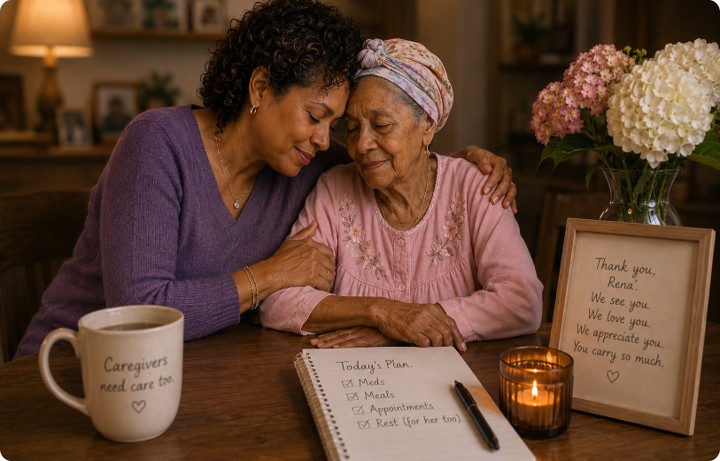
So, families adapt quietly. We start checking in more often. Running more errands for them. Cooking and freezing more low sodium easy-to-prepare, easy-to-chew meals for them. Repeating instructions. Speaking louder so they can hear us. Watching more carefully as they move around the house. Posting reminder notes on mirrors and the fridge door. Helping more subtly by removing rugs and other tripping hazards. And somewhere along the way, caregiving quietly enters the family long before anyone formally calls it: c. a. r. e. g. i. v. i. n. g.
Caregiving (Medicare.gov) Resources, stories, and newsletters about taking care of someone with Medicare.
https://www.medicare.gov/care-compare/resources/resources-and-information
Caregiving (National Institutes on Aging) Information on caregiving from the National Institutes on Aging at NIH.
Caregivers (Administration for Community Living)
Help and resources for caregivers from the Administration for Community Living.
https://acl.gov/programs/caregiving-and-direct-care-workforce
When Family Caregiving Becomes Invisible Labor
What many people fail to realize is that family caregiving often begins invisibly and gradually starts occupying visible time like a part-time job.
Long before medical equipment arrives.
Long before legal paperwork is activated.
Long before hospital admissions, rehabilitation centers, or home health care nurses enter the picture.
It begins in the small things.
The reminders. The monitoring. The grocery runs. The emotional reassurance. The coordination. The interrupted sleep. The growing anxiety. The in-person wellness checks. The silent mental load of constantly watching someone you love decline while pretending life is still normal.
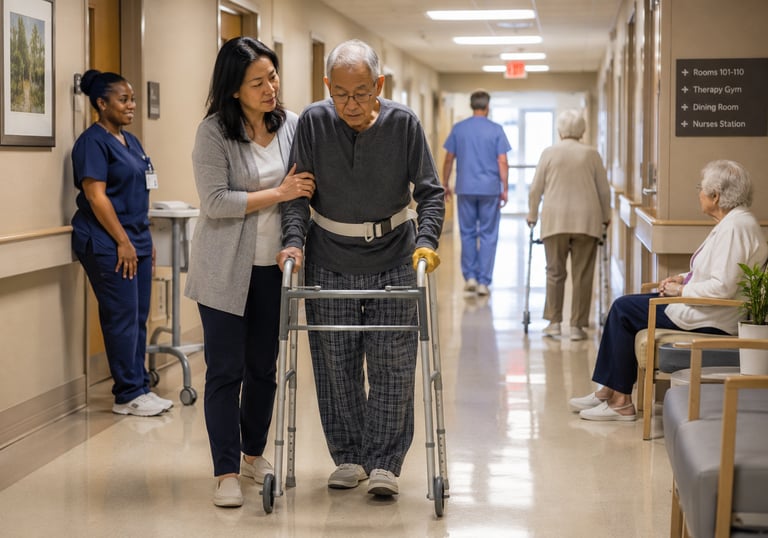
Some families make even larger sacrifices — giving up privacy, independence, personal space, routines, and sometimes pieces of themselves — by moving in with aging parents or moving their elders into their own homes in order to care for them. While actively giving care to your loved one, you slowly disappear from your own life.
And in the panic of the moment, families often do the best they can with the knowledge they have. But after walking through this experience ourselves, there are things I wish more families understood before an elder falls into crisis.
See Something, DO Something
Doing something, in this case, means preparing.
Preparation before crisis is a lot like insurance. You have it hoping you never need it, but grateful it exists when life suddenly changes.
Think of it like emergency management planning. Organizations like FEMA spend countless hours anticipating needs, responses, communication breakdowns, resource coordination, and worst-case scenarios during natural disasters, national emergencies, and acts of terrorism.
Preparing an elder care plan is also an expression of love and care.
One of the greatest misconceptions about elder caregiving is that families suddenly become caregivers overnight. In reality, many families quietly begin transitioning from daughters and sons into caregivers long before they — and the aging parent(s) themselves — emotionally acknowledge that the transition has already begun.
By the time crisis finally arrived in our family, we had already spent years preparing for realities we prayed would never fully come.
There were family meetings around my mother’s dining room table.
Not casual conversations either. No, Ma’am.
Real, hard conversations.
Power of attorney.
Estate planning.
Asset inventories.
Medical wishes.
Emergency contacts.
Financial responsibilities.
“What happens if…” scenarios none of us truly wanted to discuss out loud.
There were tears. Frustration. Anger.
Moments when the conversations became emotionally overwhelming and we had to pause, regroup, and gather ourselves before continuing. Moments when independence, fear, love, pride, aging, responsibility, and reality all collided at the same table at the same time.
And yet, those difficult conversations mattered.
Because the morning my sister woke me around 1:30 a.m. and said, “Mom fell,” there was no confusion about what to do, when to do it, how to do it, and who would do it.
We already knew our roles, responsibilities, and duties.
Because we had an elder plan in place — one we revisited, updated, and adjusted annually as circumstances changed.
We knew who would make medical decisions.
We knew where the documents were.
We knew who would coordinate care.
We knew who would communicate with family.
We knew who would communicate with the church.
We knew who would advocate.
We knew who would organize.
And we knew who would provide the quiet, deeply personal acts of love — like sleeping in a chair beside Mom’s hospital bed for eight straight nights while she recovered while working a full time job. That’s what a caregiver’s love language looks like.
Operationally, we managed the crisis like a smooth global corporation. Emotionally, we were sleep-deprived total wrecks.
Because the truth is: nothing fully prepares you emotionally for crisis of a loved one.
Much like the car accident you never expected to have, crisis shakes you up. There may be broken bones, sleepless nights, fear, confusion, exhaustion, and emotional trauma. But preparation functions like insurance. Insurance doesn’t eliminate the pain or the follow-up doctor’s appointments; it simply makes the crisis easier to navigate when emotions are already running high.
Get this…and nobody teaches families this part either…there were also rights and privileges, resources, benefits and accommodations, escalation paths, and advocacy opportunities we did not initially realize we had the legal right to request. And, what surprised me most was discovering that when families have a documented "notarized" plan, ask thoughtful questions, remain organized, advocate respectfully, and persist calmly, medical teams and nursing staff members will often work with you far more than many families realize. (pause here and let that rest in your spirit for a moment. I've bolded it so you grasp the significance of the sentence).
What I understand now is that preparation before crisis is not pessimism.
It is love.
It is one of the most compassionate gifts families can give each other before emergency decisions must be made under pressure, exhaustion, fear, and grief. Because no matter how emotionally painful those conversations may feel at the dining room table, they become invaluable when life suddenly changes.
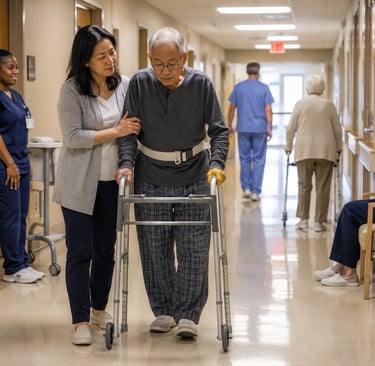
Alzheimers.gov
The government’s information resource for people taking care of those with Alzheimer’s disease and related dementias.
Eldercare Locator (Administration on Aging)
A public service connecting you to services for older adults and their families
Dementia Society of America https://www.dementiasociety.org/ May is National Dementia Awareness Month
See Something, PAY Something
One of the hardest truths families eventually discover is this: Caregiving is not only emotional. It is also physical, operational, mental, spiritual… and financial. Even families with insurance quickly learn that insurance rarely covers everything.
There are copays.
Deductibles.
Private-pay service providers.
Long-term care insurance.
Non-emergency transportation costs.
Medical supplies.
Medical equipment.
Rehab and therapy.
Diet and food texture modifications.
Home modifications.
Missed workdays.
Emergency travel.
Unexpected expenses that quietly pile up while families are already emotionally overwhelmed.
And sometimes the greatest cost is invisible.
The exhaustion.
The burnout.
The interrupted sleep.
The strain on marriages, careers, routines, privacy, and emotional health.
Many caregivers silently absorb these sacrifices because love tells them:
“Do whatever needs to be done, and I'll figure out the rest later.” That’s the love language of a caregiver.
And often, they do….whatever needs to be done no matter the sacrifice of their time, their physical and mental health, or finances.
What I now understand is that elder caregiving is not simply a medical issue or a family responsibility. It is a life transition. One that affects entire families emotionally, physically, financially, and psychologically. And yet, so many people are navigating it quietly without guidance, support, preparation, or honest conversations.
That has to change.
Over the coming weeks, I’ll be sharing reflections and lessons learned navigating elder caregiving, preparation, advocacy, exhaustion, family dynamics, invisible labor, and the quiet realities many women find themselves facing long before they feel ready.
This is the beginning of an ongoing no more hiding™ series exploring the emotional, operational, financial, and deeply human realities of caregiving and aging and aligns with our Holding It All Together Workshop scheduled in July 2026. Future installments will explore topics such as invisible labor, advocacy exhaustion, preparation before crisis, long-term care decisions, caregiver burnout, family dynamics, and the quiet ways caregiving reshapes identity, independence, and everyday life.
Certainly, I’m no elder care expert, but I do have the knowledge and operational skills to bring elder care experts together so we can begin having serious conversations that lead to real assistance for caregivers. And as a sister and daughter, I’m learning, grieving, organizing, advocating, preparing, and trying to hold it all together in real time while my sister and I care for and advocate for our loved one.
Because if there’s one thing I now know for certain, it’s this:
No family should have to navigate these kinds of life-impacting decisions alone.

Watch "Faces of Caregiving," provided the Administration for Community Living
Caregiving often happens quietly behind closed doors.
This video reflects the emotional realities, invisible labor, love, and resilience so many caregivers carry every day.

Address:
no more hiding, LLC
1190 Winterson Rd.
Suite 200
Linthicum Heights, MD 21090
Contact: Ph: 1-844-LIV-SEEN and 1-844- 548-7336
Email: hello@nomorehiding.net
© 2026 no more hiding, LLC. All rights reserved.